C&P A: Literacy
Curriculum & Pedagogy A:
Literacy
Module One - (13th-17th February (Wānanga Week) & 20th-24th February)
Micro Teaching 1 Literacy: Friday 17th February
Micro Teaching 2 Literacy: 20th-24th February
Module One for Curriculum and Pedagogy introduces our kaiako pitomata to complex world of gaining literacy from a strength-based approach that includes the importance of context, prior knowledge, and the lived experiences of ākonga. In this module kaiako pitomata will practice the art of reading aloud to ākonga. They will plan their very first lesson using the plan, teach, reflect, revise cycle in collaboration with a planning buddy. They will teach this lesson with a small group of Years 3-5. The planning will also include an introduction to comprehension and will be supported by Tompkins et al. (2019) 11 strategies for comprehension. A strong focus this this will be ‘making connections with text’. Kaiako pitomata will explore the NZC and the Achievement Objectives for Viewing, Reading, and Listening.
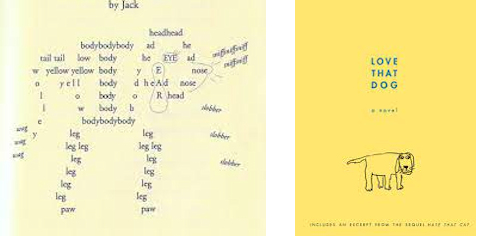 The second half of the module introduces kaiako pitomata to Gail Loane’s notion of being ‘joyfully literate’. Through the ‘joyful’ and often poignant text ‘Love that Dog’ we take a ride with Jack on his pathway to authorship. Jack supports our introduction in using a mentor text to scaffold, engage, ignite the writer in us all. This will lead us to our second planning where our kaiako pitomata will teach mentor text with another small group of ākonga. Kaiako pitomata will explore the NZC and the Achievement Objectives for Speaking, Writing, and Presenting.
Module Two - (6th March - 10th March)
Assignment One Literacy Due: 19th March
Welcome to your 5-ness!
Ākonga enter our akomanga from richly diverse homes and communities. It is important that we see and value each ākonga for themselves, that we build strong, trusting relationships with them and their whānau. In this module, literacy will be introduced in ways in which our ākonga can make connections with print through oral language, reading, and writing. We start by introducing two tamariki who are both very excited to start school. ‘Welcome to your 5-ness’ and the unique experience of starting school and the prior knowledge and lived experiences of tamariki that enter our akomanga.
To be effective Kaiako of literacy, we must understand how children progress from pre-reading and writing to emergent readers and writers through to gaining fluency as readers and writers. For this to occur we require an understanding of the cognitive, cultural, and social aspects of development. We get to grips with the ‘science of reading’ and what this means in the current educational context as well as looking back over the past 30 years.
This module introduces the pathways to literacy and includes:
- Understanding how tamariki gain effective literacy skills
- Phonological Awareness
- the Cognitive Model
- Recent work of Louise Spear-Swirling
- Structured Literacy – the ‘hows’ and the ‘whys’
- Preparation for PLD day with Chris Braid and Structured Literacy Workshop
- Engaging with the Literacy online tools and resources
Module Three - (24th - 28th April)
Structured Literacy Workshop Friday 28th April
In Module Three we continue to develop our understandings of the journey to authorship, first laid down in Love That Dog (Creech, 2001) by exploring genre, just as Jack did. We look at the purpose of writing and that it is the purpose that helps us to determine the genre. Kaiako pitomata will experience first-hand some of the issues inherent in genre-types of classifications. This key understanding is necessary for the teaching of a range of writing experiences.
In module three we make connections to science and inquiry-based learning. We incorporate ‘image’, ‘questions’, and ‘quick writes’ as well as explore the elements of informative text.
Context has been a continued focus and we broaden this to ‘place’ in module 3. We Acknowledge and celebrating the rich cultural capital that our Māori ākonga bring with them into our akomanga. The sociocultural context of our akomanga provides the opportunity to embrace an individual's cultural identity, beliefs, and values. This creates a rich tapestry for kaiako to draw on to understand the strengths and next steps for ākonga. Notably, such an environment creates learning partnerships ensuring that ākonga can maintain their own mana ōrite, and stand with us as rangatira ki te rangatira.
In module three we:
- View genre as a social process that is purposeful
- Examine and explore a variety of text types
- Continue to strengthen our lesson launches to draw on prior knowledge and engage ākonga
- Connect literacy with Inquiry
- Explore the importance of writing in context and place
Module four - (12th - 16th June)
In this module, we continue to practice our planning skills while unearthing the key features of the different approaches to reading and writing which the cornerstone of reading programmes in New Zealand schools. Specifically, we will engage with the different approaches to reading and writing that include guided and shared approaches as well as language experiences. We view these through the ‘release of responsibility model’. We will also continue to practice our modelling with tamariki.
We grapple with the different approaches to ‘how’ we listen and engage ākonga in reading, look at alternatives to ‘round robin reading’ and what effective practice looks like in our akomanga. We explore the value of modelling books and how this supports the voices of ākonga as well as including the purpose of learning. Finally, we explore decodable and instructional texts and what this means for us as literacy kaiako.
Module Five - (7th - 11th August)
This module focuses on comprehension and how our inquiry pedagogy support ākonga to answer the wonderings that they have. Reading without comprehension would be a largely pointless task. Understanding and making connections to what we read broadens our knowledge base and opens our minds to world around us. For some ākonga, gaining reading competencies in decoding text comes more easily (for a variety of reasons) than developing comprehension skills. Comprehension is indeed a complex concept. This module also begins to explore the role of assessment and the variety of formative and summative assessment that are used in kura.
We engage with Loane’s (2017) Three Level Guide to exploring text that starts with literal comprehension, and continues on to inferential comprehension, and evaluative comprehension. Another tool in our kete will be exploring reading responses through the art of journaling.
Finally, we have fun with persuasive text and writing! We explore our passions and see how this is a significant driver when we wish to persuade our audience.
Module Six - (14th - 18th August)
In our final two modules, we will explore assessment in reading and writing. This includes the importance of culturally sustaining pedagogy and mātauranga Māori. In Module Six the focus will be on reading. Alongside this, we will explore further decoding strategies, spelling, the importance of accuracy, and the place these hold in our literacy programme. First we start with exploring ‘read alouds’ with our older ākonga, the use of sophisticated picture books, and multi-media texts.
We dive deep into the lexicon of the English language to examine further the place of phonological awareness (as well as phonemic awareness and phonics), the complexities of vowels as well as syllables, prefix, suffix, onset, rime, and word classification. We look at what this means for our emergent through to fluent readers. For our older readers we de-mystify where the words of the English language came from and how knowing this supports as readers and writers.
Module Seven - (30th Oct - 3rd Nov)
This module returns to a focus on genre, this time with narratives in mind. Narratives are often explored through picture books, sophisticated picture books, short stories, novels and media. We explore our local pūrākau and use strategies such:
- Think alouds
- Sketching
- Storyboarding
- A focus on language features & structures
Through this ākonga are exploring narratives as readers and writers.
The final part of our this module examines narrative comprehension through viewing a moving image text. In particular short films (a particular passion of mine!). This brings us back to where we started our year, opportunities for ākonga (and ourselves) to connect and interpret using their own prior knowledge, lived experiences, and interests.
The final part of this module explore writing assessment in Aotearoa and the different tools and strategies we as kaiako draw on. We look at the collaborative process that this is, to ensure that assessment – like learning is interactive, social, and a contextual concept.