C&P B: Technology
Completion requirements
Curriculum & Pedagogy B:
Technology
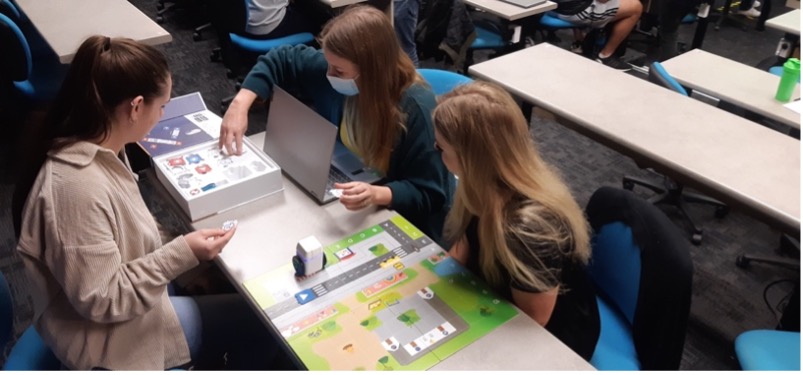 Our Technology course explores Technology education in Aotearoa including the philosophy of Technology education, Technology in the New Zealand Curriculum, the history of technological education in New Zealand, and a wide variety of learning experiences in each of the technological strands. We emphasise that Technology education is more than using digital devices. That it is about design, creativity and innovation using a wide range of available materials and resources. Within each module we also explore the cultural capital of diverse groups within our classrooms and how to incorporate Mātaruanga Māori into our teaching authentically.
Technology Modules Overview
Module 1: Introduction to Technology
- What Technology Education in the New Zealand Curriculum is.... and what it isn't
- Teaching approaches (pedagogies) that align with technology education
- Ways of using digital technology creatively to produce and share a short introductory video about ourselves using green screen technology (yay!).
Module 2: Design Thinking
- Envisage future careers that you are preparing ākonga for,
- Revisit constructionism and identify teaching approaches that are underpinned by this learning theory in Technology,
- Brainstorm what might be included in a Makerspace and describe the roll of kaiako in this setting,
- Explore strategies to encouraging human-centred design in classroom,
- Follow the Design Thinking Model to create products or systems that meets an identified need for an end-user (buddy).
Module 3: The Design Process
- Describe each phase of The Design Cycle and explain what ākonga and kaiako will do at each stage of this model,
- Identify how using The Design Cycle draws on various strands and technological learning areas within the Technology Curriculum,
- Give examples of effective teacher feedback that could be used at various stages of the Design Cycle to guide learning,
- Describe how you might scaffold students towards providing meaningful peer feedback to guide learning,
- Follow the Design Cycle to create a manu tukutuku| kite.
Module 4: Computational Thinking
- Consider how to engage ākonga Māori through developing tasks that reflect the cultures and world views of ākonga using ako and whānau.
- Define computational thinking and the Computational Thinking skills involved in carrying this out.
- Participate in unplugged and computerised computational thinking tasks and discuss the advantage of this progression in the NZ Curriculum
- Use block-based coding programmes to create simple animations and games with Scratch, makey makey, and micro:bits
- Analyse how we used CT while carrying out these tasks
Module 5: Computational Thinking and Robotics Education
- Identify the Strands and Technological Learning Areas from the NZC that robotics teaching draws on
- Discuss what robotics teaching might look like at different levels of the curriculum.
- Anticipate how ākonga might define robots and join the debates around their impact on society.
- Describe teaching approaches for explicit teaching of Computational Thinking Skills in robotics education.
- Create your own code to program a range of robots and bots that you might find in Tear 1-8 classrooms.
Module 6: Technology and Connected Curriculum
- Explore the importance of planning for authentic connections between learning areas while maintaining a strong learning focus and explicit teaching within each subject area.
- Participate in a range of learning experiences that connect Technology and Social Sciences while maintaining explicit learning for each subject area.
- Use mind-mapping tools such as a Lotus Map to support planning for teaching within a connected curriculum.
- Find a group for your C&P B Assessment 3
- Work collaboratively with your assessment group to complete the Digital Badge Task for Module 6 - a Lotus Map brainstorm that you will use as a springboard to select your concept, and learning lesson focuses for both the Aotearoa New Zealand Histories and the Technology curriculums.
Module 7: STEM Education
- Take a deeper look at what STEM is,
- Explore issues of diversity within STEM education and related industries,
- Identify and analyse attributes of high quality STEM learning experiences,
- Practise modifying learning experiences to enhance the quality of learning and teaching within a STEM lesson/unit.
- Engage with a range of STEM learning experiences that you could use in your own future classrooms.