Programme information
Programme information
TŪĀPAPA
Our tūāpapa forms the foundation on which the entire programme has been built. It is our moral, ethical and relational grounding. Its purpose is to provide ongoing, robust guidance in the development and implementation of all aspects of the programme.
He waka eke noa, he whānau aroha noa, he kaupapa puta noa
At the heart of this programme is the right for all to flourish. Te Tiriti o Waitangi is the waka that carries us on our learning and teaching journey. This programme reflects the dynamic, complex and responsive nature of learning and teaching and fosters connectedness, courage, curiosity and creativity. Graduates will have an emergent sense of identity and efficacy to respond with care and aroha in all their interactions.
TOHU
The Tohu (image) has been designed to represent the Graduate Diploma of Learning and Teaching, along with the explanation that has been written by the designer. It has been designed to reflect the tūāpapa on which the programme rests.
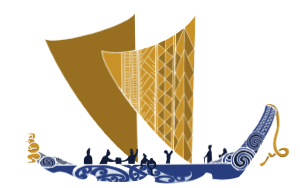 The waka in many ways represents the coming together in order to achieve a common goal. With a diversity of minds, we are better able to play to the strengths of every individual and navigate the world and the challenges that lie within it.
Te Tauihu (The head of the waka): The tauihu at the front is a representation of a mentor. When stepping in to learning space, it all begins with the teacher or someone who is competent about te kaupapa o te wā. This speaks true for teachers that aren't human as well, such as nature.
Te Hīwi (the body of the waka): Te Hīwi o te waka is what keeps everyone above water. This could be interpreted in many different ways and is for you to think about when going on this journey of education. Sometimes it is your whānau, sometimes it's the music that gets you through the study session, sometimes it's a cheeky late-night scoop of ice-cream (whatever floats your boat (literally). I'm the artist not the critique).
Te Kei (The back of the waka): Te Kei o te waka is the key navigating piece of the waka. In many ways it corresponds with the Tauihu in that it represents the guide to mastery. This could be interpreted as the ontologies and epistemologies that guide your learning and the goals you set out to achieve when enrolling. Te Kei in this instance also represents the end of the journey, as illustrated by the yellow tassel which is likened to the tassel on the graduation caps. But as we know, education is not merely a means to an end, but an end within itself, which is what makes this Kei the Key.
Ngā hēra (The sails): The sails represent diversity. The sails help the kaupapa catch wind to get the waka moving! The designs on the sails woven together with the respective cultures that decide to hop aboard the waka. In other words, "different, but same-same."
Ngā tangata (The people): Everyone has their role to play, whether in an education setting or an everyday setting. E kī ana te kōrero, mā pango, mā whero ka oti ai te mahi. When we work together, the job is sussed. This also represents the stages of the education journey and what needs to be done in order to get to the next stage.
Ngā tae (The colours): The colours are the colours of the institution, Massey! Massey serves as an identifier of the iwi that sail this waka. Whilst Massey is a pākeha institution, it seeks to be guided with Te Tiriti o Waitangi as a Pou for decisions that are to be made.
Ngā mihi!
- Tahu-Potiki Te Maro-Doran
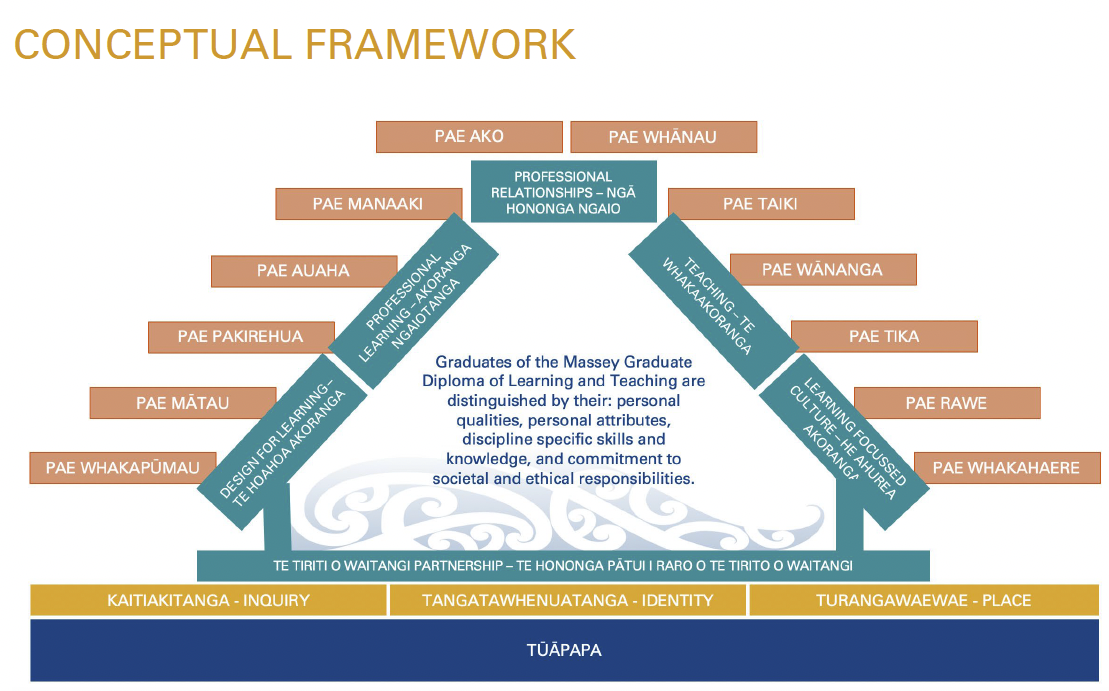
The conceptual framework for the programme is grounded on the tūāpapa. Rising up from the tūāpapa is the paepae which embodies three core principles that are woven throughout the programme: Kaitiakitanga, Inquiry; Tangatawhenuatanga, Identity; Tūrangawaewae, Place.
The paepae connects the Standards for the Teaching Profession to the tūāpapa, through the metaphor of a centrally situated wharenui.
The wharenui rests within the shelter of Paerangi, the Massey University Teaching and Learning Strategy. It creates the meeting place where students learn and grow through partnership; a place where ideas, learning and authentic experiences are woven together, enabling Massey Graduates to confidently embody the Graduate Profile, The Code of Professional Responsibility and the Standards for the Teaching Profession.
COURSE DETAILS
Courses in the programme are grouped into three strands:
• Learning and Teaching (30 credits)
• Curriculum and Pedagogy (60 credits)
• Professional Practice (60 credits)
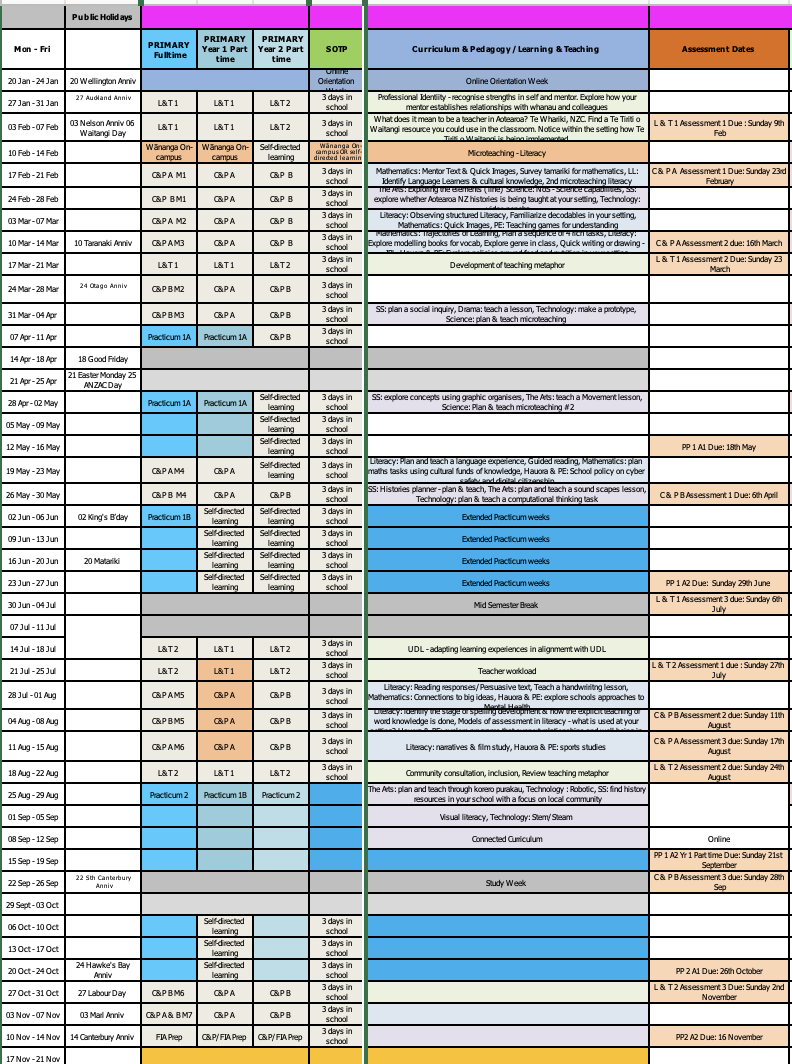
Programme Calendar 2025